
Express Trainer Mentoring: Minimal outlay, maximum support - Start your VET career with expert guidance!
Trainer Mentoring Program: Minimal outlay, maximum support - Start your VET career with expert guidance!

How to Become a First Aid Trainer in Australia: Qualifications, Scope and Income

how to become a first aid trainer - TAE Training

First aid training is one of the most accessible entry points into a training and assessment career in Australia. Demand is high, entry requirements are clear, and day rates are competitive.

This guide walks through how to become a first aid trainer – the exact qualifications you need, how to build a scope that employers pay for, and the realistic pathway from your current role to delivering your first HLTAID course.

How do you become a first aid trainer in Australia?

To become a first aid trainer in Australia you need TAE40122 Certificate IV in Training and Assessment plus the current HLTAID first aid qualifications you intend to deliver, primarily HLTAID011 Provide First Aid and HLTAID009 Provide Cardiopulmonary Resuscitation. You must also demonstrate current industry currency through ongoing professional development or active first aid experience.

Most trainers add a few related units to their scope: HLTAID010 Provide Basic Emergency Life Support, HLTAID012 Provide First Aid in an Education and Care Setting, and HLTAID014 Provide Advanced First Aid. Employers prefer candidates with three or four HLTAID units on scope because that keeps classroom capacity flexible. Our TAE40122 course page covers the first step.

What qualifications do you need to train HLTAID011?

To train HLTAID011 Provide First Aid you need TAE40122, the current HLTAID011 yourself, documented industry currency, and in practice usually HLTAID009 Provide CPR and HLTAID010 Provide Basic Emergency Life Support as well. Most RTOs prefer trainers who can deliver the full HLTAID suite rather than one unit in isolation.

The RTO you work for will maintain their training and assessment strategy for HLTAID011. Your onboarding will include confirming you meet vocational competency, currency and qualification requirements under the Standards for RTOs 2025. Expect to provide evidence of recent first aid experience: volunteer work, workplace first aid response, industry ambulance or nursing background, or equivalent.

Do you need a nursing or paramedic background?

No, but it helps. Many first aid trainers come from nursing, paramedicine or defence backgrounds and bring rich real-world experience. But you can absolutely enter the field from a non-clinical background through documented first aid experience, community-level training and PD aligned with current ARC guidelines.

Practical pathways without clinical qualifications include becoming a workplace first aid officer for 12-24 months, volunteering with St John Ambulance or Red Cross for regular community event coverage, completing additional HLTAID units beyond the base, and keeping a detailed log of every first aid intervention you make. Combined with TAE40122, that pathway is genuinely competitive at entry level.

How long does it take to become a first aid trainer?

Most candidates complete the pathway in three to six months. The quickest route is four weeks for TAE40122 in the face-to-face intensive, plus four to six weeks to complete or refresh the HLTAID units, plus four to eight weeks to build currency evidence and land the first RTO contract.

Speed bumps usually involve currency. An RTO cannot put you on scope without documented recent first aid work, and some candidates need to do community volunteering first before an RTO will approve them. Plan that into your timeline.

Our how to become a trainer and assessor guide has more detail on the general pathway.

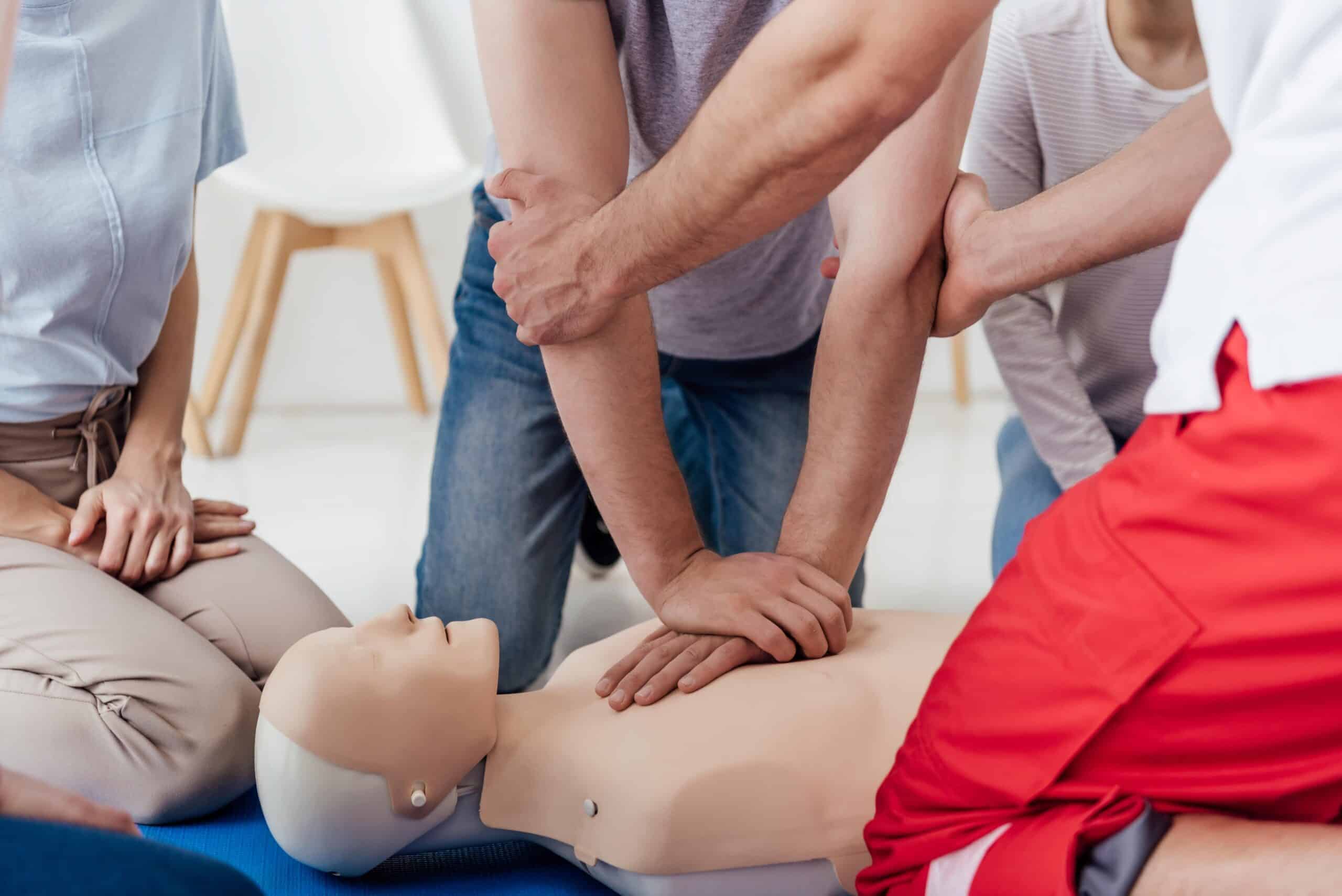
how to become a first aid trainer - CPR training with female instructor

How much do first aid trainers earn in Australia?

First aid trainers in Australia typically earn $400 to $800 per day as contract trainers, with some experienced trainers charging up to $1,000 for large corporate or specialised sessions. A full-time first aid trainer inside a large RTO usually earns $65,000 to $85,000 plus superannuation. Freelance trainers who fill five days a week can net well over $120,000.

The day rate depends on the client, course type and your scope breadth. Corporate sessions pay more than community, advanced first aid pays more than basic, and multi-unit delivery in a day pays more than single-unit. Large RTOs running high-volume programmes sometimes pay lower per-session but offer steady work.

Where do first aid trainers find work?

First aid trainers find work through national RTOs like First Aid Pro,, corporate L&D contracts, freelance contracting on platforms like Seek and AllTrainersJobs, and direct enterprise RTO work inside larger employers. Many trainers combine two or three streams to keep their week full.

The easiest first role is usually with a national provider because they train high volumes and bring new trainers onto scope regularly. Once you have six to twelve months of experience, freelance day-rate contracting becomes viable because you can demonstrate delivery history and class-management competence.

What does a day of first aid training look like?

A typical day for a first aid trainer runs eight hours on-site with a cohort of 8 to 16 learners. Morning sessions cover theory and CPR practice. Afternoon sessions cover first aid scenarios, bandaging, AED use, and final assessment. You arrive an hour early to set up manikins and equipment and stay 30 minutes after to pack up and submit attendance.

Admin is a real portion of the role. You verify photo ID, check enrolment forms, mark attendance, complete assessment records, and submit paperwork to the RTO’s compliance system. Trainers who treat the admin as seriously as the delivery become the trainers RTOs keep rehiring.

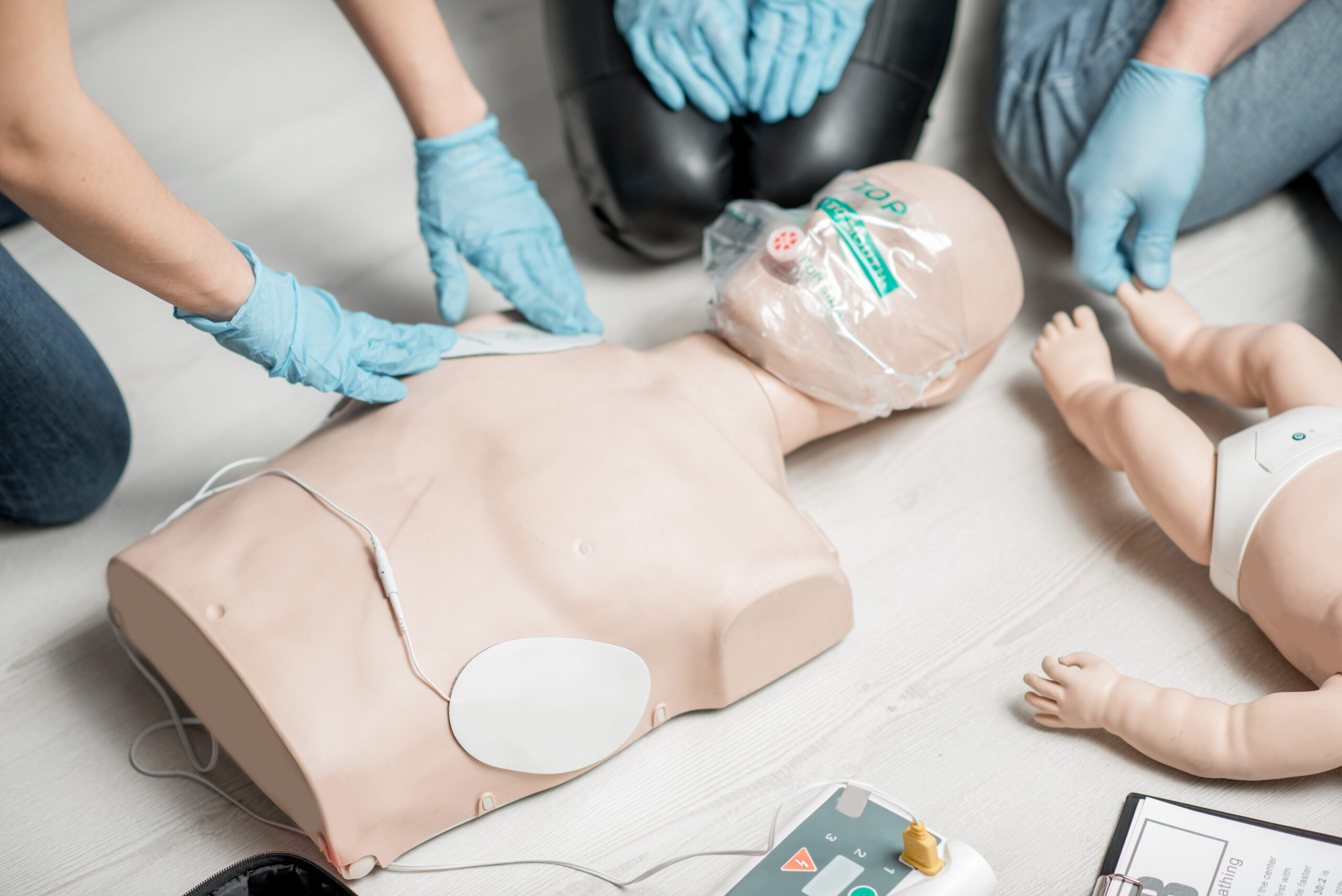
First aid training - Clinging a contacts on a dummy teaching how to make defibrillation during the first aid training

What equipment and resources do first aid trainers need?

Most RTOs provide equipment. You bring yourself, your scope documentation, your current HLTAID qualifications and ideally a backup set of bandages, pocket masks and spare gloves. For freelance and corporate work, you may need to bring manikins, AED trainers, bandages, scenario props and a laptop for assessments.

A full freelance trainer kit costs $1,500 to $3,000 once-off. Most trainers build the kit progressively as they pick up more work. You may be able to hire or share equipment from the RTOs you contract with. Talk to the compliance officer at your first RTO about what they supply before spending money on a complete kit.

How do you keep your first aid trainer currency?

Currency is the most audited area of first aid training. Keep current HLTAID qualifications, log at least 20 hours of PD per year aligned with ARC guideline updates, attend annual train-the-trainer refreshers from your RTO, and maintain a log of your active first aid experience. ARC guidelines update roughly every five years, and trainers are expected to update their delivery within three to six months of each update.

Practical currency activities include community event volunteering, workplace first aid roles, reading the current ANZCOR guidelines, attending Australian Resuscitation Council or Australian First Aid Association webinars, and maintaining HLTAID012 if you deliver to early childhood educators. Expect your RTO to ask for this log annually.

Related reading

Start your first aid trainer pathway with TAE40122

Learn TAE (delivered in partnership with RTO 40407) runs TAE40122 in four delivery modes to suit first aid trainer candidates at any stage. Most first aid career-changers finish TAE40122 in four to eight weeks and secure their first contract within three months. Check the next cohort at https://learntae.com.au/contact-us/

Frequently Asked Questions

Can I train first aid with only HLTAID011 and TAE40122?

Technically yes, but most RTOs require HLTAID009 and HLTAID010 as well because they deliver the units together. Make sure your first aid training provider delivers these within your HLTAID011 course. Adding them to scope is straightforward and significantly improves your employability.

HLTAID003 is the older code for Provide First Aid and was superseded by HLTAID011 in the 2020 update. The content is similar but HLTAID011 includes updated ANZCOR guidelines and pandemic-related considerations. Train HLTAID011.

Yes. Part-time and casual first aid trainer roles are common, especially with national providers. Many trainers work one to three days a week alongside other employment. Freelance day-rates make part-time financially viable.

No. Clinical qualifications help but are not required. Documented first aid experience, HLTAID qualifications, and TAE40122 are enough. Many working first aid trainers are ex-tradies, defence veterans, paramedic assistants or community first aid officers.

Start by completing HLTAID009, HLTAID010 and HLTAID011, (delivered as one course) then volunteer with St John Ambulance or Red Cross for six to twelve months to build currency. During that time, complete TAE40122. By the end of the year you have a competitive profile for your first trainer role.

Need more information?

Call our friendly team on1300 858 849 to map the fastest pathway for your situation.

Share the Post:

Related Posts